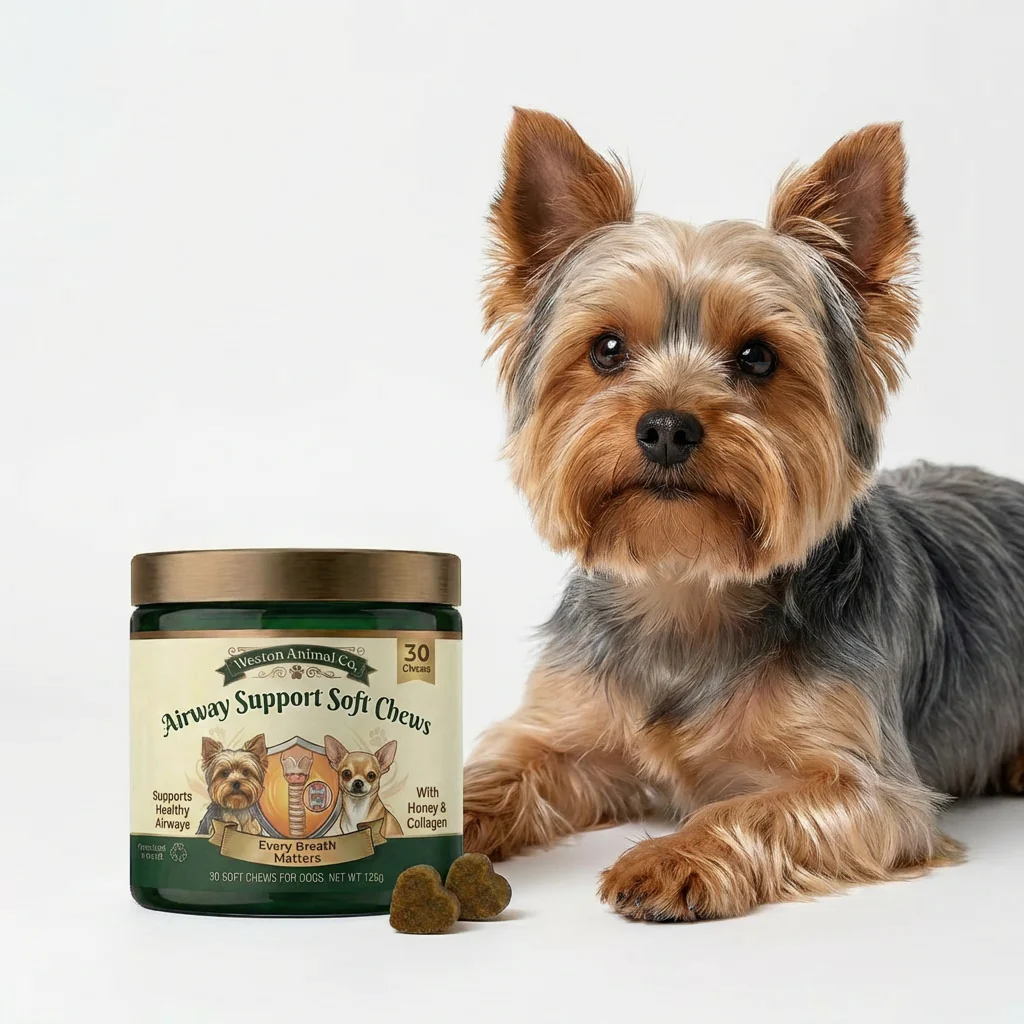
That “cute” goose honk your Yorkie makes? Vets say it’s the sound of your dog choking.
For fourteen years I told owners it was just a small dog thing. Then I started running the bloodwork no one runs, and realised we had been getting this wrong from day one.


Dr. Rachel Torres, DVM
Veterinary Respiratory Specialist • Charlotte, NC
If you own a Yorkie, a Pomeranian, a Chihuahua or a Shih Tzu, you have almost certainly heard it. A sudden, honking, goose-like sound when they get excited, pull on the leash, or gulp water too fast. Most owners laugh. Most vets shrug. I spent ten years doing the same thing.
I was wrong. That sound is not normal, and it is not cute. It is the sound of your dog’s airway physically closing on itself, a brief, repeating episode of suffocation that most owners have been told to ignore.
In clinical language, it is called tracheal collapse. The C-shaped cartilage rings that hold the windpipe open begin to soften and flatten under the normal pressure of breathing. Every honk, gag or reverse-sneeze is the airway temporarily shutting. And in small breeds it is far more common than owners realise: Yorkies are roughly 16× more likely than other breeds to develop it, and by age ten about half of all Yorkies have some degree of collapse.
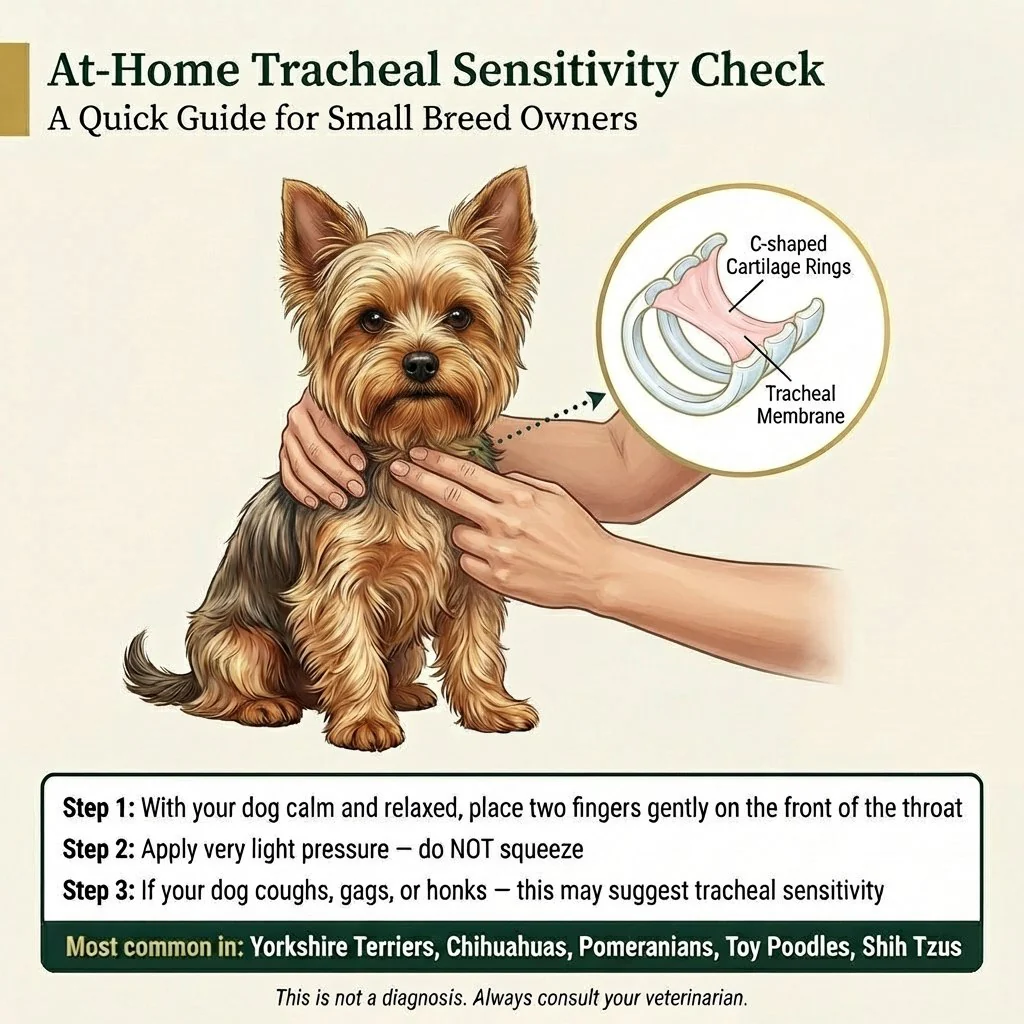
The script every owner hears
The first visit goes like this: “Small dogs do that. It’s just tracheal sensitivity. Use a harness instead of a collar. Keep her calm. Come back if it gets worse.”
Six months later, the honking is daily. “Still within normal range.” Six months after that, episodes are lasting longer and the dog’s tongue went a little purple once. “Okay, let’s try a cough suppressant.” Then, eventually: “We need to talk about a tracheal stent. It’s about $4,000–$6,000.”
For most of my career, this was the protocol. Monitor. Suppress. Operate when the airway was almost gone. The trachea itself was never being protected, it was just collapsing on schedule while we watched.
“Cough suppressants silence the noise. They do not rebuild the cartilage rings that are collapsing.”
What the bloodwork showed
A few years ago I started running a panel on every honking small dog that walked through my door: glucosamine sulfate, chondroitin, vitamin C, collagen markers, omega-3 index, manganese. The raw materials hyaline cartilage needs to hold its shape.
Over eighteen months I collected detailed data on 94 small-breed dogs with early-to-moderate collapse. 87 of them, 93% , were severely deficient in at least two cartilage-supporting nutrients.
Their tracheas weren’t collapsing purely because of genetics. They were collapsing because the cartilage simply did not have the materials it needed to stay rigid. Genetics loaded the gun. Nutrition was pulling the trigger.
Why generic “joint chews” don’t fix this
Here is the part that surprises owners most. The glucosamine-and-chondroitin chews on every pet-store shelf are formulated for the cartilage in knees, hips and elbows , weight-bearing synovial joints.
Tracheal rings are hyaline cartilage: non-weight-bearing, different structure, different nutritional needs. Giving a small dog a generic hip-and-joint supplement for a collapsing airway is using the wrong fuel for the wrong system. It is why so many owners tell me “we tried supplements, nothing changed.”
Tracheal cartilage needs vitamin C for collagen synthesis, MSM and hyaluronic acid for structural integrity, and marine-derived EPA/DHA to control airway inflammation , in therapeutic doses, in bioavailable forms, and dosed for a 5–7 lb dog rather than a 70 lb retriever.
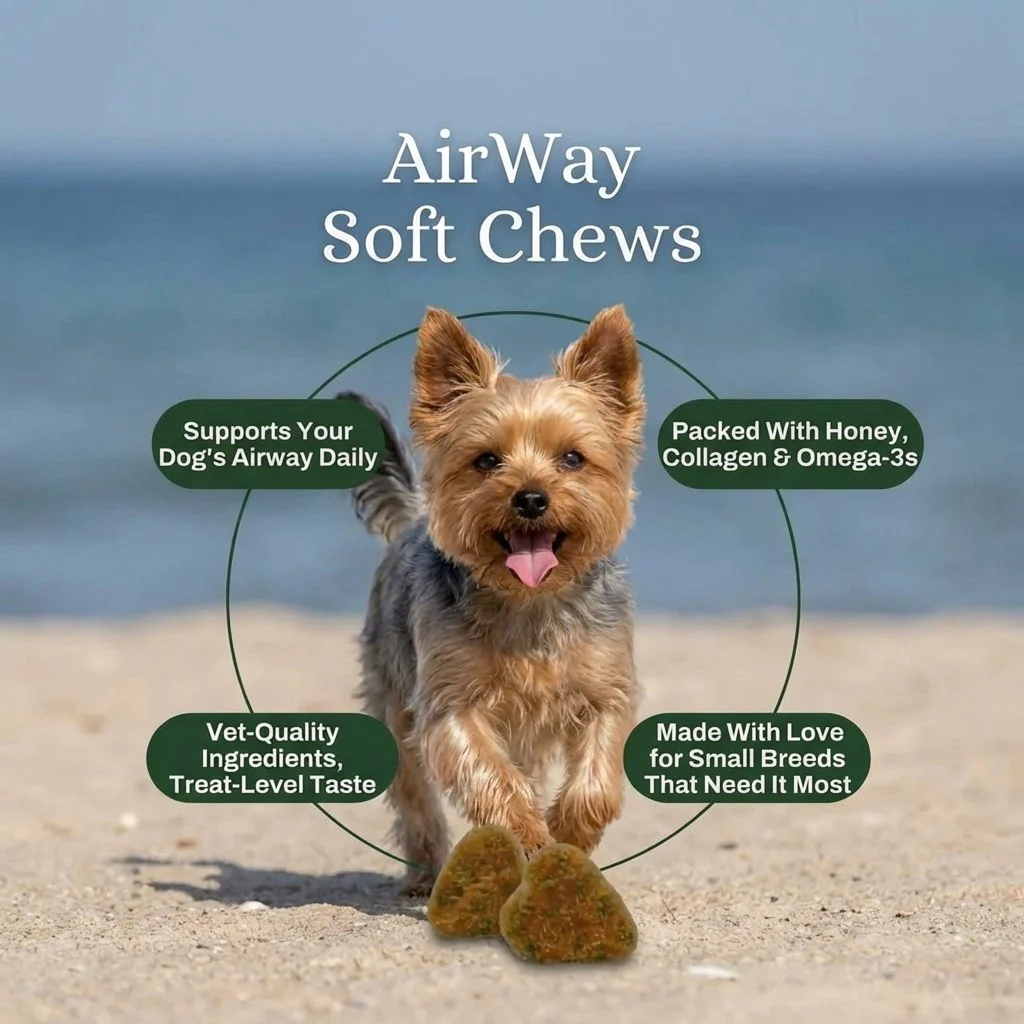
What I now recommend on day one
When I started looking for an airway-specific chew that actually matched the science, almost nothing on the market held up to scrutiny. Most products I had sent to an independent lab came back underdosed, using plant-derived omega-3 with poor bioavailability in dogs, or bonded to fillers that blocked absorption.
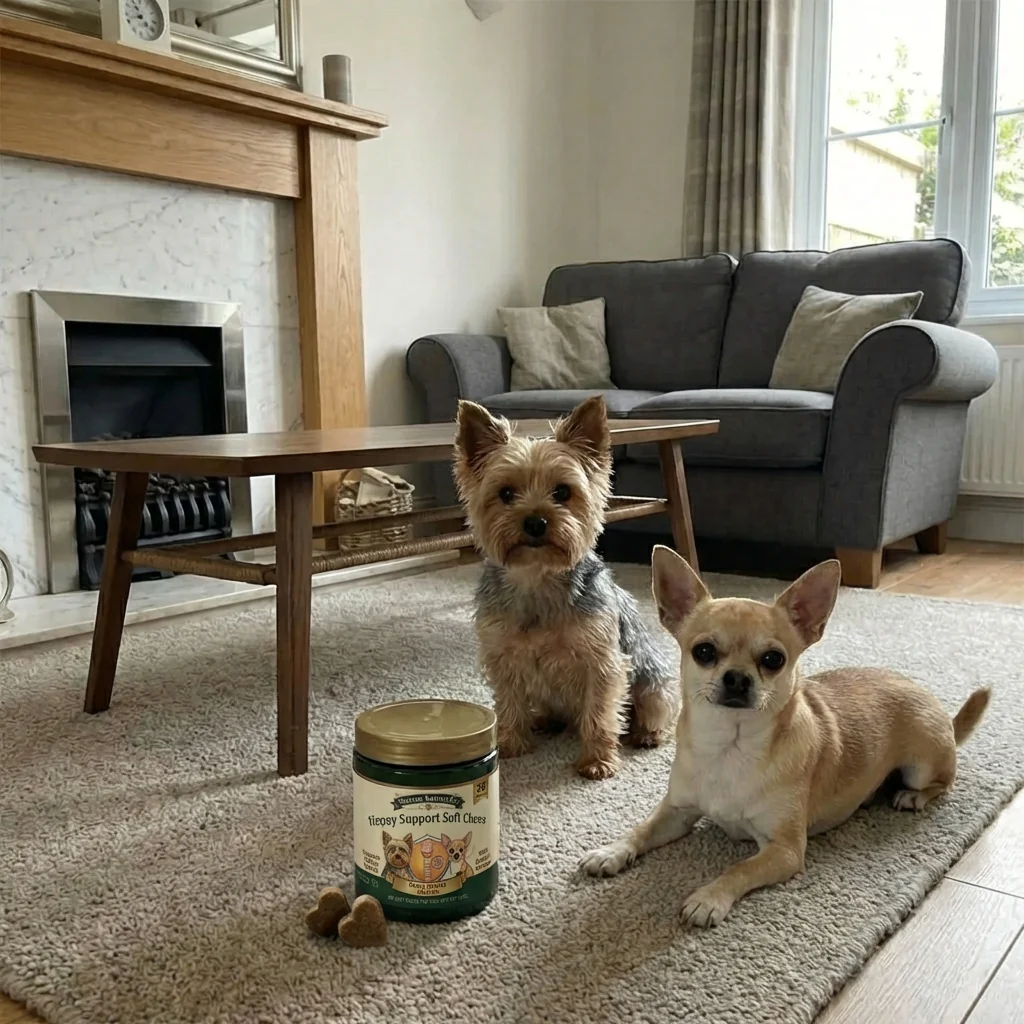
The one I now point owners to is Airway Support Soft Chews by Weston Animal Co. I have no commercial relationship with them; I just like that the formula is built specifically for small-breed tracheal cartilage rather than repackaged from a generic joint supplement, pharmaceutical-grade glucosamine, marine-source EPA/DHA, properly bonded chondroitin, and vitamin C in a form that supports collagen synthesis.
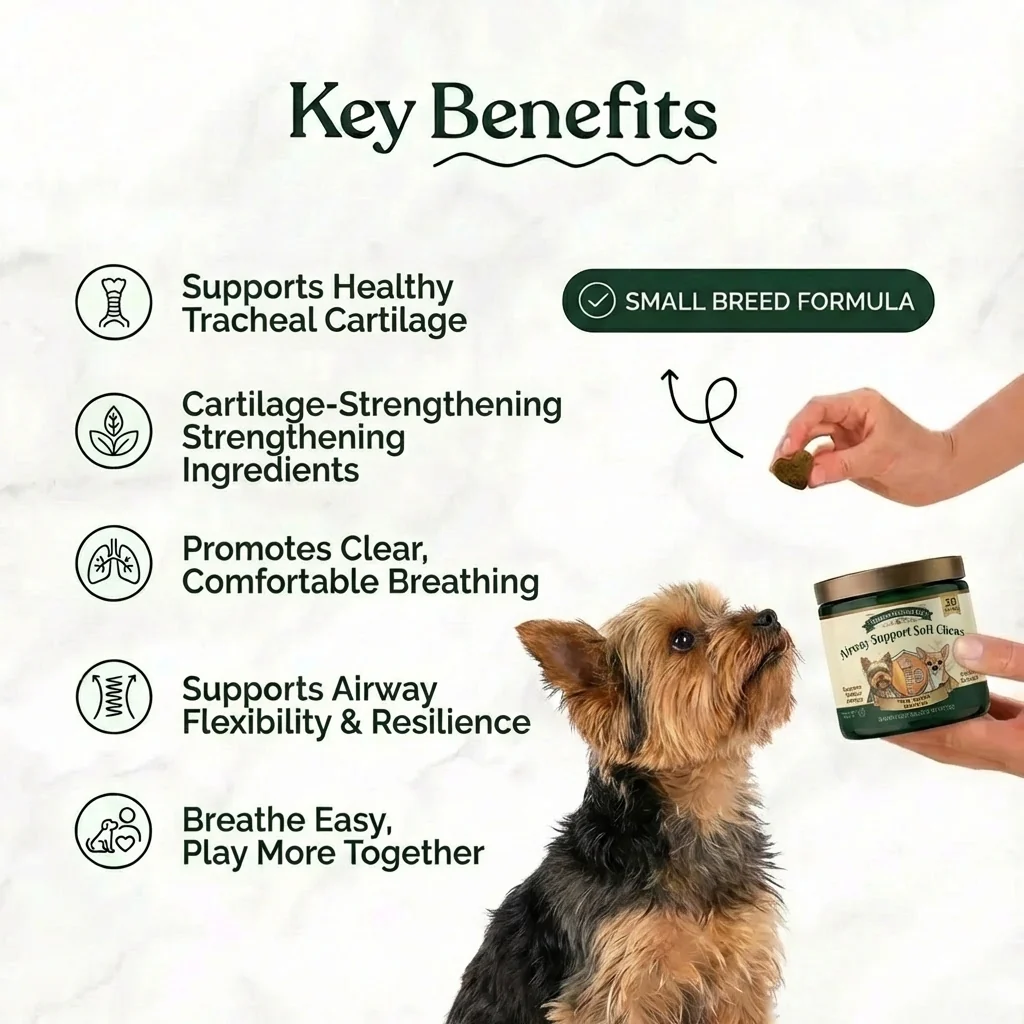
Editor’s Note
Airway Support Soft Chews, Weston Animal Co.
- •Built for small-breed tracheal cartilage, not repackaged from a hip-and-joint formula
- •Marine-source EPA/DHA omega-3 with high bioavailability , not flaxseed
- •Chondroitin bonded for cartilage uptake; vitamin C in the correct form for collagen synthesis
- •Dosed for toy breeds under 15 lb, the dogs most at risk
What owners actually notice
The pattern I see in practice is fairly consistent. Around week two, owners report the honking episodes are shorter and less frequent. By week four, the wheezing at night usually quietens; many tell me their dog has started sleeping through without a coughing fit for the first time in months. By week six to eight, the dogs are visibly more comfortable , running, playing and tolerating excitement without triggering an episode.
I want to be honest about what this is and isn’t. It is not a cure. Tracheal collapse is progressive and damage already done cannot be reversed. What proper cartilage nutrition does is give the rings the building blocks they need to slow or stall further collapse, and for most owners, that is the difference between a comfortable dog and a $5,000 stent conversation.
When to start
If your dog has never honked, this is the easiest window you’ll get, onset is typically between ages four and seven, and the goal is to support the cartilage before it starts flattening. If your dog already honks daily, this is the most important time to start. Grade 1 or Grade 4, two years old or eleven, the cartilage still needs the same raw materials.
The thing I want every small-breed owner to take away from this piece is simple: the honk is not normal. It is the earliest possible warning sign of a condition that gets worse with time and silence. Don’t wait for the 3 AM emergency.
If your Yorkie, Pom, Chihuahua or Shih Tzu honks , even occasionally, start supporting the cartilage today, while the rings are still flexible.
View Offer →Frequently Asked Questions
My vet said it’s “just a Yorkie thing.” Is it?
No. The honking sound is the airway temporarily closing as cartilage rings flatten. It is progressive, it does not get better on its own. Yorkies are 16× more likely to develop tracheal collapse than other breeds.
How long until I see a change?
Cartilage nutrients take time to build in tissue. Most owners notice fewer episodes within 2–4 weeks and quieter breathing at night by week 4–6.
Can I give this with my dog’s cough suppressant?
Yes. Cough suppressants manage the noise. Airway chews support the underlying cartilage. They work in different places and are designed to be used alongside your vet’s plan.
Why not a generic joint chew from Amazon?
Joint chews target weight-bearing knee and hip cartilage. Tracheal rings are hyaline cartilage with different nutritional needs, and independent lab testing found 10 of 11 popular “airway” products were underdosed, contaminated or biologically useless.
What if my dog refuses to eat it?
Weston Animal Co. backs every order with a 60-day money-back guarantee. If your dog turns up their nose, you get a full refund.
My dog is already Grade 3. Is it too late?
No. We cannot reverse damage already done, but supporting the cartilage with the right raw materials can slow or stall further progression at any grade. The best time to start was when the honking began. The second-best time is today.